



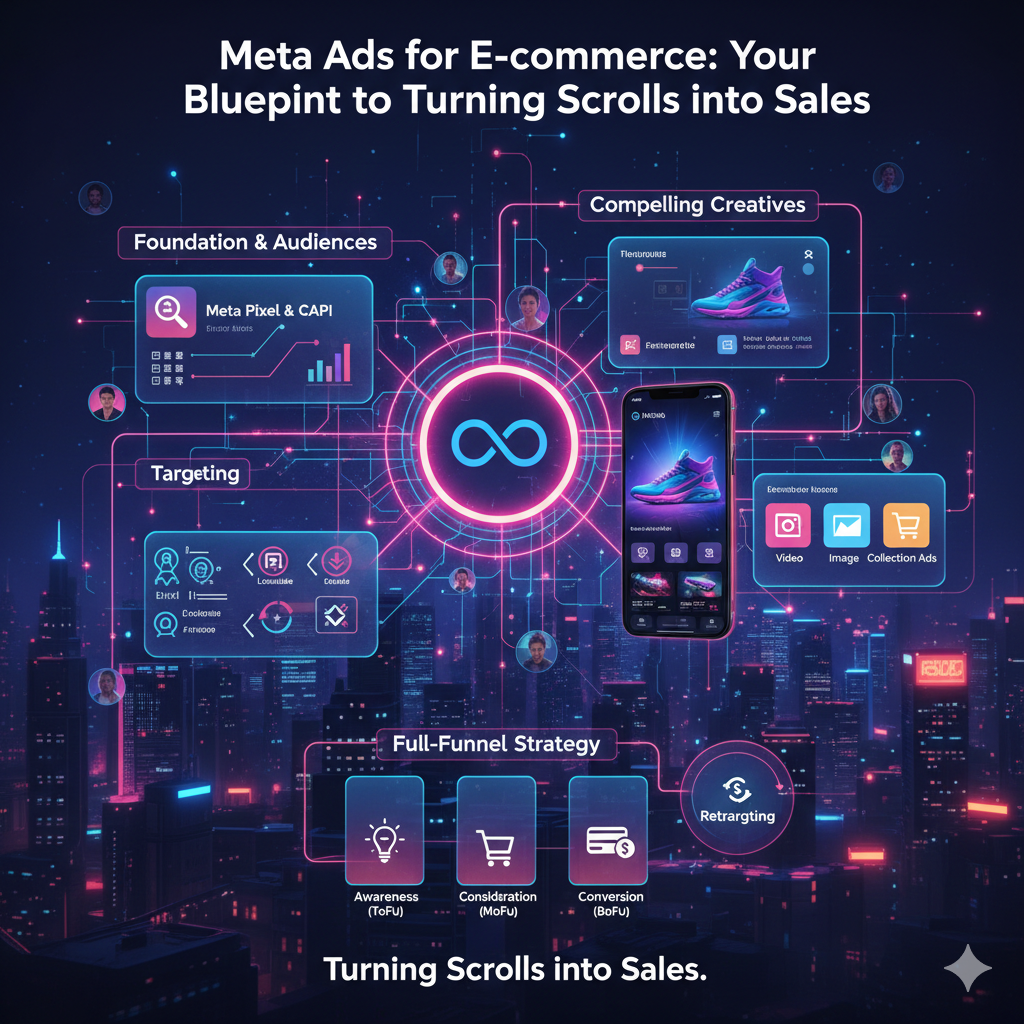
In the bustling digital marketplace, getting your products seen is half the battle. With billions of users scrolling daily, Meta (Facebook & Instagram) Ads aren’t just an option for e-commerce businesses—they’re a necessity. But how do you navigate the ever-changing landscape of Meta’s ad platform to actually convert those scrolls into sales?
This isn’t about throwing money at the problem; it’s about strategic targeting, compelling creatives, and understanding the Meta ecosystem. Let’s break down your blueprint for e-commerce success with Meta Ads.
Why Meta Ads are a Goldmine for E-commerce
Before we dive into the “how,” let’s reinforce the “why”:
-
Massive Audience Reach: Facebook and Instagram boast over 3 billion monthly active users combined. Your customers are there.
-
Granular Targeting: Meta’s data allows you to target users with incredible precision based on demographics, interests, behaviors, and even past interactions with your brand.
-
Visual-First Platforms: E-commerce thrives on visuals. Instagram and Facebook are perfectly suited for showcasing your products beautifully.
-
Full-Funnel Capabilities: From building brand awareness to driving direct purchases and re-engaging past customers, Meta Ads support every stage of the buyer’s journey.
The E-commerce Meta Ads Blueprint: Step-by-Step
1. Set Up Your Foundation: The Meta Pixel & Conversions API
This is non-negotiable. The Meta Pixel is a small piece of code you install on your website that tracks user actions (like viewing a product, adding to cart, or purchasing). The Conversions API provides a more reliable, server-side data connection, especially with increasing privacy restrictions.
-
Action: Install the Meta Pixel and Conversions API on your e-commerce store (Shopify, WooCommerce, etc., often have easy integrations).
-
Goal: Enable Meta to track events, optimize your ads for conversions, and build custom audiences for remarketing.
2. Define Your Audiences: Beyond Basic Demographics
This is where Meta truly shines. Think beyond age and gender.
-
Core Audiences: Target based on interests (e.g., “vegan cooking,” “hiking gear”), behaviors (e.g., “engaged shoppers”), and demographics.
-
Custom Audiences: Upload your customer lists, target website visitors (e.g., “people who viewed a product in the last 30 days but didn’t buy”), or those who engaged with your Facebook/Instagram pages.
-
Lookalike Audiences: One of the most powerful tools! Meta finds new users who “look like” your existing best customers or website visitors.
3. Craft Compelling Creatives: Show, Don’t Just Tell
Your ad creative is your storefront window. Make it irresistible.
-
High-Quality Product Images/Videos: This sounds obvious, but blurry or poorly lit images are instant scroll-stoppers.
-
Showcase Benefits, Not Just Features: How does your product solve a problem or enhance their life?
-
Diverse Ad Formats:
-
Single Image/Video: Great for focused product showcases.
-
Carousel Ads: Perfect for displaying multiple products, different angles of one product, or a step-by-step process.
-
Collection Ads: A full-screen, mobile-optimized experience that integrates video/image with product listings.
-
Dynamic Product Ads (DPAs): Crucial for e-commerce! These automatically show personalized ads to users based on products they’ve viewed on your site.
-
4. Structure Your Campaigns for the Full Funnel
Don’t just run one campaign. Think about the customer journey:
-
Awareness Campaigns (Top of Funnel – ToFu): Introduce your brand to cold audiences using broad interest targeting or Lookalikes. (Objective: Brand Awareness, Reach, Traffic)
-
Consideration Campaigns (Middle of Funnel – MoFu): Engage users who’ve shown some interest but haven’t purchased. (Objective: Engagement, Video Views, Traffic, Lead Generation)
-
Conversion Campaigns (Bottom of Funnel – BoFu): Drive sales from warm audiences (website visitors, cart abandoners, email list). (Objective: Conversions – Purchase)
-
Retargeting Campaigns: Re-engage those who added to cart but didn’t buy. Offer a discount, create urgency, or showcase testimonials.
5. Optimize and Iterate: The Never-Ending Cycle
Meta Ads are not “set it and forget it.”
-
Monitor Your Metrics: Keep an eye on Cost Per Purchase (CPP), Return on Ad Spend (ROAS), Click-Through Rate (CTR), and Cost Per Click (CPC).
-
A/B Testing: Test different headlines, ad copy, images, videos, calls to action, and audience segments.
-
Budget Allocation: Shift budget towards campaigns and ad sets that are performing best.
-
Ad Fatigue: Rotate your creatives regularly to prevent your audience from getting tired of seeing the same ads.
The Future is Personalized and Visual
As privacy evolves and competition stiffens, the e-commerce businesses that win on Meta will be those that prioritize:
-
Exceptional Creative: Visually stunning and emotionally resonant ads.
-
Deep Audience Understanding: Leveraging all the targeting options to reach the right people.
-
Continuous Testing: Never stopping the quest for better performance.
By following this blueprint, you can transform Meta’s vast user base from casual scrollers into loyal customers, driving significant growth for your e-commerce business.